Tuesday, May 6, 2014

Jenny & Noah's Housewarming Present


Last year I did an assemblage for my older daughter Bronwyn about her grandparents during WWII. My younger daughter Jenny and her partner Noah have just moved into their first house and I thought it a good time to do a family assemblage for her too. I had a perfect weathered shelf that I painted in pinks and greens, using crackle paint on the top surfaces around the shelves and arcrylic craft paints on the backgrounds and sides. Green was my parents' favourite colour - almost every room in my house growing up was green.  And pink went with several of the family heirlooms included in the piece.  The following descriptions are taken from the letter I wrote to Jenny that accompanied artwork.


The fourth shelf shows your Great Grandfather Guy Clifford Ewart, Grandma’s father.  He was about three or four in the picture around 1883-4. The little pink cup belonged to his mother Harriet Ewart (your Great Great grandmother) and when he was young and not feeling well, his mother would let him use it to drink orange juice.


The third shelf has a picture of your Great Grandma Blanche Jackson Ewart, Grandma’s mother.  The picture was taken in 1887 when she was 16 months old, 16” long and weighed 16 pounds.  She was a month premature and very small at birth.  They put her in a shoe box and rested her in the oven the first day to keep her warm.  Even when she a grown woman she was only 4’11’ tall.  The pink toothpick holder belonged first to her mother Catherine Jackson – your Great Great Grandmother, then to your Great Grandmother, then to your Grandmother, then to me and now to you.


The second shelf contains a gavel and stand that your Grandpa Paul made for Grandma when she was president of the Volunteer Firemen’s Ladies Auxiliary during the ‘60’s.


 The top shelf holds a cigarette case that your Grandma Becky used during the late ‘40’s and early ‘50’s. It has her initials on it and Grandpa got it for her. The picture of them was taken during WWII in Grandma’s backyard on Soldano Street in Azusa


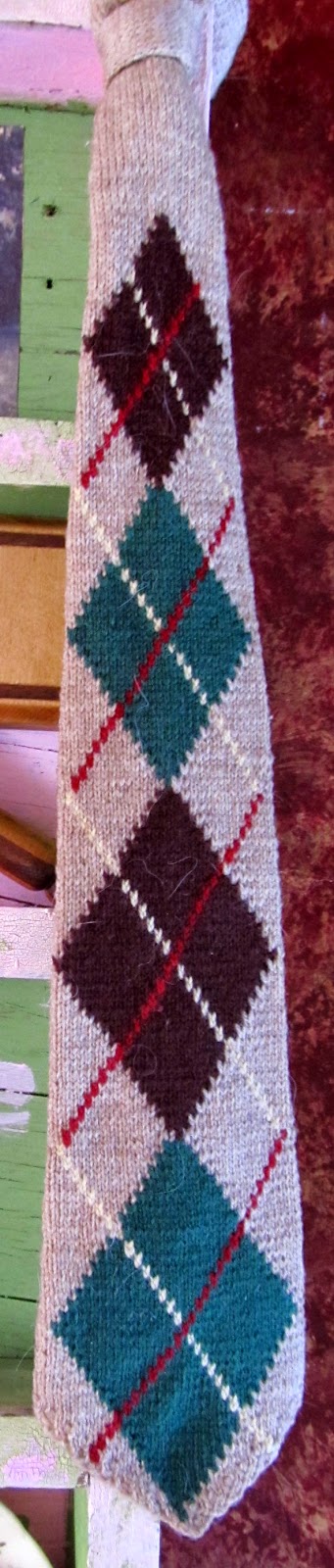
The tie along the side was knitted for your Grandpa Paul by Grandma Becky.  She even sewed in a little label telling what kind of yarn she used.  There was a pair of sox to match, but Grandpa wore those out – he wore sox much oftener than he wore ties!


Sunday, May 4, 2014

Life on the Coast


Can't let spring go by without at least one shot from 
the top of Hwy 46, looking down towards Morro Rock.

Friday, May 2, 2014

From the Bookshelf


I love this little book - don't leave for your next trip to Paris without it!

From Amazon -Travelers who follow the walking tours in The Impressionists' Paris will never see the paintings—or the city—in the same way again. From the historic Paris along the Seine, through the bustling grands boulevards, to the cafés of Pigalle and the dance halls of Montmartre, this guidebook pairs some of the world's most beloved masterpieces with the exact locations where they were painted. Readers follow in the footsteps of the artists from the pont Neuf depicted by Monet and Renoir to the intersection where Caillebotte painted his haunting street scene; from the balcony of the Louvre where Monet literally and figuratively turned his back on the establishment to the Gare St. Lazare, the train station from which he departed for his home in Giverny. Also revealed is the view out Manet's window, where he watched—and immortalized—a one-legged veteran hobbling down the flag-draped street. Period dining recommendations and the addresses of the studios where the painters worked, the buildings where they lived, and their birthplaces and gravesites complement this delightful guide.


Wednesday, April 30, 2014

At Last - The Handles Find a Home!


 This is the ending to a story that started 10 years ago when we bought these French door handles on our honeymoon in Paris..  I first told it on Lisa Hoffman's Gypsy Bonfire Blog back in 2008 and then on my own blog a little over a year ago.  Go to either of the links and find out the saga of the un-usable handles.


Here's what they look like as a door handle, which we couldn't do, because once we got home it was impossible to get the proper hardware to change American doors to take the handles.


Well, between us - me with the idea and my brilliant wife Margot with the technical know-how, came up with this solution.  We mounted them on a weathered piece of driftwood to make a hat rack.


My hat collection is growing by leaps and bounds now that the chemo is underway, and this is a great way to hold them and, finally, a answer to "what do we do with those un-usable handles?"


As with so many projects, even once we'd figured out what we wanted to do, there were several trips to the hardware store, a false start or two, but now here it is!


All that lovely French ceramic lusciousness on display!


I had promised to let you know when the handles finally found their place and now they have. And every time I hang a hat up there, Margot will remember forever carrying that heavy bag of tiles and handles down the Rue de Rivoli  but at least there's a happy ending now that they're finally on display and looking "Oh, so French!"


Monday, April 28, 2014

Last Few Tags (til next time!)


Two more tag techniques from Tim Holtz.  The first using a Distress Paint marbled background with plastic numbers from Idea-olgy that are dabbed with Distress paint then rubbed in places before dried with a heat tool.


I love the shabby look lifting off some of the paint gives, just be watchful with the heat tool, too much will melt the plastic.


The second technique calls for covering the tag in metal foil tape - aluminum in this case.  Then putting it into an embossing folder.  I used a rolling pin to do the embossing.  I have a machine that my daughter (the one who's a Michael's manager) got me for Christmas, but I'm embarrassed to say I haven't learned how to use yet!.  It sorta worked, but obviously better results would have been had with a machine.  The two patterns I tried are from ClutterBug - Fleur de Lis and Spots and Dots


Then you coat the foil tape with Distress Paint, I use Antiqued Bronze. Then you wipe away most of the paint.  The idea is that the paint will sink into the embossed parts and wipe off the surface.  It would have worked better if the embossing was deeper (which it would have been with a machine) but it still left an interesting surface. Guess my next project is to learn how to use that machine!!


I put all the tags I've done so far on a big key ring, where I can flip through them and study the techniques any time I want or need to.  It was fun working on these "mini-projects", I learned lots of new ways to use the paints and inks and it felt good to finish up so many.

Saturday, April 26, 2014

Altered Book - Barbara and Blanche Rose


This is an altered book I created based on a backstory I wrote about the two main characters.

Here are spreads from the book accompanied by the story.

Barbara Elizabeth LaVette was born in 1900 in Paris.  Her parents Edward Stephan and Elizabeth Marie were living abroad for a period of twenty years while Edward ran the Paris division of the world-wide Nagrom Bank.  Barbara’s brother Stephen, four years older, was also born in Paris. He and Barbara were very close and his death, by gas, in the trenches of Ypres in 1915 was devastating to his younger sister.  The family had returned to New York when France entered the war, but Stephen had remained to fight for the only country he had ever known.


      Barbara’s ancestors on her father’s side had left France in the 1820’s during economic unrest to try and reverse their fortunes in the bustling streets of 19th century New York.  By the time of the Civil War the LaVettes owned a shipping line and two iron foundries.  At the end of the war their worth had trebled and Edward’s grandfather moved into banking.  Edward, born in 1870, took to the financial life like a cat to cream and by the time he was sent abroad to handle the Parisian affairs he had been in the family business for seven years already.  He took with him his youth, intelligence, zest for life, and his new bride Elizabeth Marie Beauregard of the Charleston Beauregards – a South Carolina family who traced their residency in American back to 1695.


     The LaVettes lived in the 5th Arrondisement near the Panthenon and the Luxembourg Gardens.  Stephen attended the nearby Henri 4th Ecole des Garcons.  Barbara went to the Covent School of the sisters of St. Agnes d’ Angneau.  It was here, in 1910, that she first met Blanche-Rose La Chapelle when Barbara was ten and Blanche-Rose eight.  Even then Blanche-Rose was painting and drawing and Barbara loved to write.  They became fast friends and it was a sad day for both when war broke out and the LaVettes made the decision to return to the safety of New York.


     Blanche-Rose LaChapelle was born in 1902 in the apartment above her parent’s café on the Blvd. St. Michel, Café ChouChou.  She was the third child, having an older sister Camille, and a brother Claude who was killed in WWI a scant few months before the November Armistice.  Though not as close as Barbara and Stephen, still Claude’s death affected Blanche-Rose deeply.  Always a shy child, she withdrew even more.  Her father Paul Henri, and her mother Hannah Louise, married in 1896.  Claude was born a year later and her sister Camille in 1899.  Their father ran the family café that was his father’s before him, Hannah at his side.  Hannah’s aunt Adrienne had made Blanche-Rose her favourite great niece.  Who knows why, who can say?  When she died in 1907 she left money for Blanche-Rose to attend the nearby convent school.

     
 It was here she met Barbara.  The girls were inseparable and spent afternoons at the café or the Luxembourg Gardens near Barbara’s home.  They played childish games. Blanche-Rose painted, Barbara wrote stories, they made plans for a future that changed abruptly in August of 1914.  The afternoon before the LaVettes left for America the two girls shared a last meal on the terrace of Café Chou-Chou.  Barbara’s sadness at leaving not only her friend, but the only home she had ever known was made even greater due to the fact that Stephen was staying behind to fight the Germans, had, in fact, already enlisted.  Blanche-Rose’s brother Claude had gone with him three days before and both would be leaving soon for training camp.

  
   The usual promises to write and keep in touch were made through shaky tears.  Barbara, with all the drama of her fourteen years, clasped Blanche-Rose’s hand and said “I vow to return to Paris and to you ma petite. When this is over, when the world is sane once more, I will come back!”  And little Blanche-Rose replied “I believe you ma amie, c’est vrais.”   The LaVettes took the train from Gare St. Lazar the next morning and the following day were on a ship out of Le Harve for New York.
   

    The war drug on for four merciless years, America finally joining the fray, long after Stephen had given his life.  Barbara and Blanche-Rose wrote, but mail was uncertain and eventually no more letters came from France.

    
 Barbara attended high school in Manhattan and then Columbia University majoring in journalism.  Her father’s contacts and her talent got her a job on the New York Daily Herald in 1920.  By 1922 she had made a name for herself and decided to take some time off to write a novel.  And where better than in Paris?

    
 Blanche-Rose spent the war helping her parents in the Café and finishing her years at school.  Great Aunt Adrienne’s money stretched to cover a painting teacher for Blanche-Rose in the years after the war.  Now in 1922 she has had a few shows in local galleries on the Left Bank and is beginning to be noticed in artistic circles. And now the stage set for Barbara and Blanche Rose to meet once again under Parisian skies.  The writer and the painter, now grown and reunited.


Thursday, April 24, 2014

Insect Balls - on the Cheap!


 I was at our local Beverley's (a fabric and craft store)
 the other day and I found this upstairs
in the clearance department.


 These were originally $26.95 for six. 
 Only five left and only $5.00 for the lot!


 They are ceramic and about 3" in diameter.


I love them, I guess they appeal to the
 Victorian entomologist in me.


 I'm not sure if they'll end up in an art project - 
something steam-punky perhaps?


Or if I'll just put them in a big bowl and enjoy looking at them.  
But either way how could I resist, I mean, $5.00?!?!

Tuesday, April 22, 2014

Guest Post from Sassy Feet - Faded Pastel Tennies for Spring


Sunday, April 20, 2014

Life on the Coast


Beautiful lupine on a sunny hillside -
 the essence of  spring on the Central Coast.

Friday, April 18, 2014

From the Bookshelf


This is a charming and informative little volume that wanders its way through different neighbourhoods in the city by the bay.  We meet a divergent group of people, architecture, activities and a myriad way of getting words down on paper.  We see the city through Maisel's eyes and his writing.  Beautifully illustrated by Paul Madonna, it's the perfect size to slip into your journal bag and take with you, pull out and peruse while you're at the cafe or the park.  For journalers, writers and anyone who loves San Francisco.